
 label Business
Keep business papers that a law or possible claim requires, such as accounts, GST records, contracts and payroll records, for the period your adviser confirms. Move rarely used records to storage in labelled boxes with an index. Shred duplicates, drafts and outdated material securely, never in ordinary waste, and keep a destruction log. Don't destroy anything under a legal hold. Self Storage India offers private, lockable rooms with 24/7 CCTV, regular pest control, monthly plans with no lock-in and a GST invoice for business customers.
- Why does a business need a keep-or-shred policy?
- How do you decide whether to keep, store or shred?
- What should go to storage rather than the office?
- What is a legal hold, and why does it matter?
- How should business papers be shredded?
- Can scans replace paper originals?
- Who should decide what gets shredded?
- How often should the business review its papers?
- How secure is a storage room for business papers?
- How much does record storage cost?
- Where can businesses store records in Delhi NCR?
- Keep, store or shred checklist
- FAQs
- Sources and notes
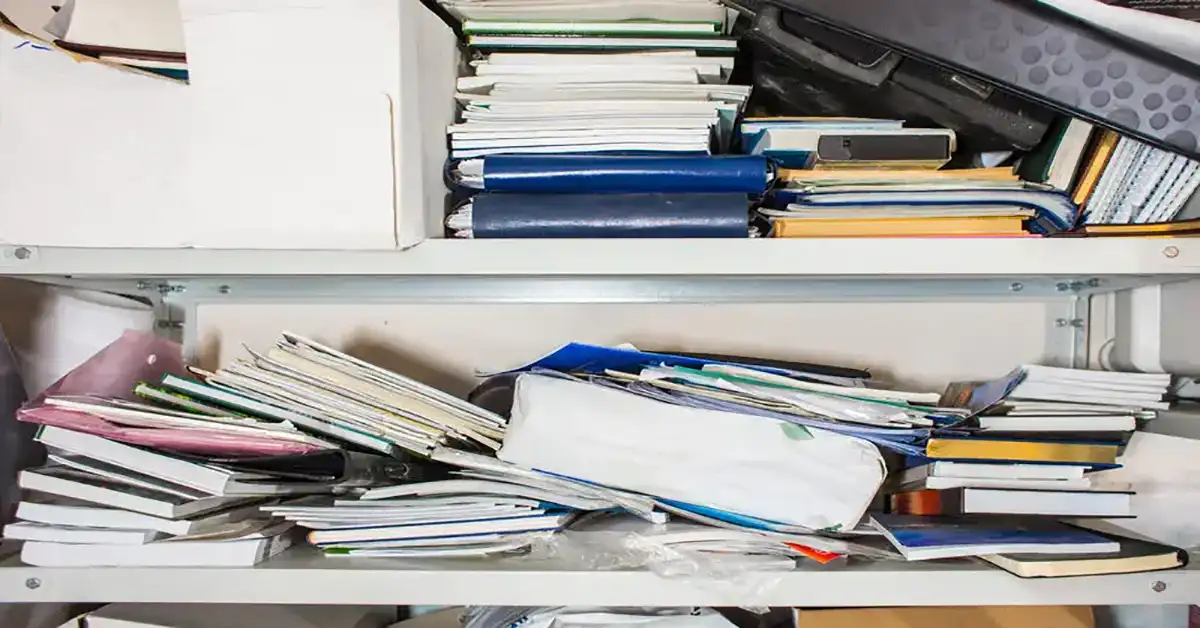
Most offices hold on to far more paper than they need, because nobody is sure what can safely be thrown away. Old quotations, duplicate invoices, drafts and expired brochures sit in the same cupboards as tax records and contracts that must be kept for years. Keeping everything wastes space and money, but shredding too early can leave you without proof in an audit, a tax assessment or a dispute. The answer is a simple decision process: keep what the law or the business needs, store what you rarely use, and shred the rest securely. This guide explains how to decide which business papers to keep, store or destroy.
Why does a business need a keep-or-shred policy?
- Space is limited. Paper that has no use takes room from current work.
- Laws set minimum periods. Company law, GST, tax and labour rules require many records to be kept.
- Disputes need evidence. Contracts and correspondence may be needed years later.
- Old papers hold personal data. Keeping them longer than needed adds risk.
- Clear rules save time. Staff don't have to guess, and nothing is shredded by mistake.
How do you decide whether to keep, store or shred?
Ask four questions about each type of paper. Does a law require us to keep it, and for how long? Could we need it as evidence in a contract, claim or dispute? Does the business still use it for current work? Is there an electronic copy that is accepted as the record? If a law or a possible claim applies, keep it for the full period. If it's needed now and then but not daily, move it to storage. If none of these apply, it can usually be shredded.
| Type of paper | Usual decision | Confirm with |
|---|---|---|
| Books of account, vouchers and GST records | Keep for the legal period, then review | Your CA |
| Contracts, leases and agreements | Keep for the term plus the period a claim could be made | Your legal adviser |
| Payroll, PF and ESI records | Keep for the period set by labour laws | Your HR or payroll adviser |
| Board minutes and statutory registers | Keep, often for long periods or permanently | Your company secretary |
| Duplicate copies and drafts | Shred, if the original or final is kept | Your record owner |
| Old quotations, brochures and circulars | Shred or recycle once no longer relevant | Your record owner |
| Unsuccessful job applications | Keep only as long as your policy allows, then shred | Your HR adviser |
For more on legal periods, read our guide on record retention periods in India.
What should go to storage rather than the office?
Records you must keep but rarely open suit storage well: closed financial years, former employees' files, completed project files and expired contracts still within their claim period. Pack them by year and type in archive boxes, label them with codes and a review date, and keep an index so they can be found. Our guide on boxing and indexing office files explains the method step by step.
What is a legal hold, and why does it matter?
A legal hold means a record must not be destroyed, even if its normal retention period has ended, because it relates to an ongoing matter. This could be a tax assessment, a GST notice, an audit, a court case, an insurance claim or a regulator's inquiry. Mark held records clearly in your index and on the box, and take the hold off only when your adviser confirms the matter is closed. Shredding held records can cause serious problems.
How should business papers be shredded?
Never put confidential papers in ordinary waste. For small volumes, a cross-cut office shredder works. For larger clear-outs, use a reliable document destruction vendor who can shred on site or collect sealed bags. Ask for a certificate or receipt stating what was destroyed and when. Keep your own log listing the box numbers, record types and years destroyed and who approved it. Remove staples and clips only if the vendor asks; most industrial shredders handle them.
Can scans replace paper originals?
Scanning saves space and makes records easier to search. But some laws require original documents or set conditions on electronic records, and some contracts need the signed original as evidence. Check with your CA or legal adviser before shredding originals that have been scanned. Many businesses scan frequently used papers and keep originals in storage for the full retention period.
Who should decide what gets shredded?
Give each type of record an owner: accounts owns financial papers, HR owns employee files, and the legal or admin team owns contracts and statutory records. Only the owner can approve destruction for their records, after checking the retention schedule and any legal holds. For larger clear-outs, ask a director or partner to sign off as well. Write these roles into a one-page policy, so new staff know who to ask before they throw anything away, and so decisions are recorded rather than made on the spot.
How often should the business review its papers?
Set one review date each year, for example after the annual accounts are finalised. On that date, each department checks its boxes against the retention schedule, lists what has passed its period, checks for legal holds and gets sign-off. Shred what is approved, move newly closed files to storage and update the index. A yearly routine stops paper from building up again.
How secure is a storage room for business papers?
With a private, lockable room, you use your own padlock and keep the only key. The facility has 24/7 CCTV and regular pest control. Limit who holds the key and keep a log of boxes taken out. Confirm the facility's operating hours and access arrangements with the team before planning a clear-out visit. Read security for business storage.
How much does record storage cost?
Pricing depends on the room size and location you choose. Plans are monthly with no lock-in, and a yearly shredding routine keeps the space you need in check. Business customers can get a GST invoice. Pickup, packing and transport can be arranged through partners at an additional cost. Use the storage calculator or call +91-9090206090 for a quote.
Where can businesses store records in Delhi NCR?
Self Storage India serves Noida, Delhi and Gurugram. Choose the location closest to your office, so yearly reviews and retrievals take less time.
Keep, store or shred checklist
- List every type of paper the business keeps
- Confirm legal periods with your CA and advisers
- Keep what a law or possible claim requires
- Store rarely used records in labelled boxes
- Shred duplicates, drafts and outdated material
- Mark legal holds in the index and on boxes
- Check with advisers before shredding scanned originals
- Use a cross-cut shredder or a reliable vendor
- Keep a destruction log and certificate
- Never put confidential papers in ordinary waste
- Review all papers once a year
Disclaimer: this article gives general information and is not legal or tax advice. Retention periods depend on your business and can be extended by legal holds. Confirm what to keep with your chartered accountant or legal adviser before destroying records.
Frequently Asked Questions
Duplicates, drafts and outdated material, as long as the original or final record is kept.
A rule that a record must not be destroyed because it relates to an ongoing matter, such as an assessment or case.
Check with your CA or legal adviser first. Some laws require originals.
With a cross-cut shredder or a reliable vendor, with a destruction log.
Yes. Business customers can get a GST invoice.
Self Storage India serves Noida, Delhi and Gurugram.
Sources and notes
Checked 1 Nov 2026.
- Unit features, plans and GST invoice: Self Storage India home page.
- Record retention: how long businesses should keep records in India.